

Consumer Research → Growth PM
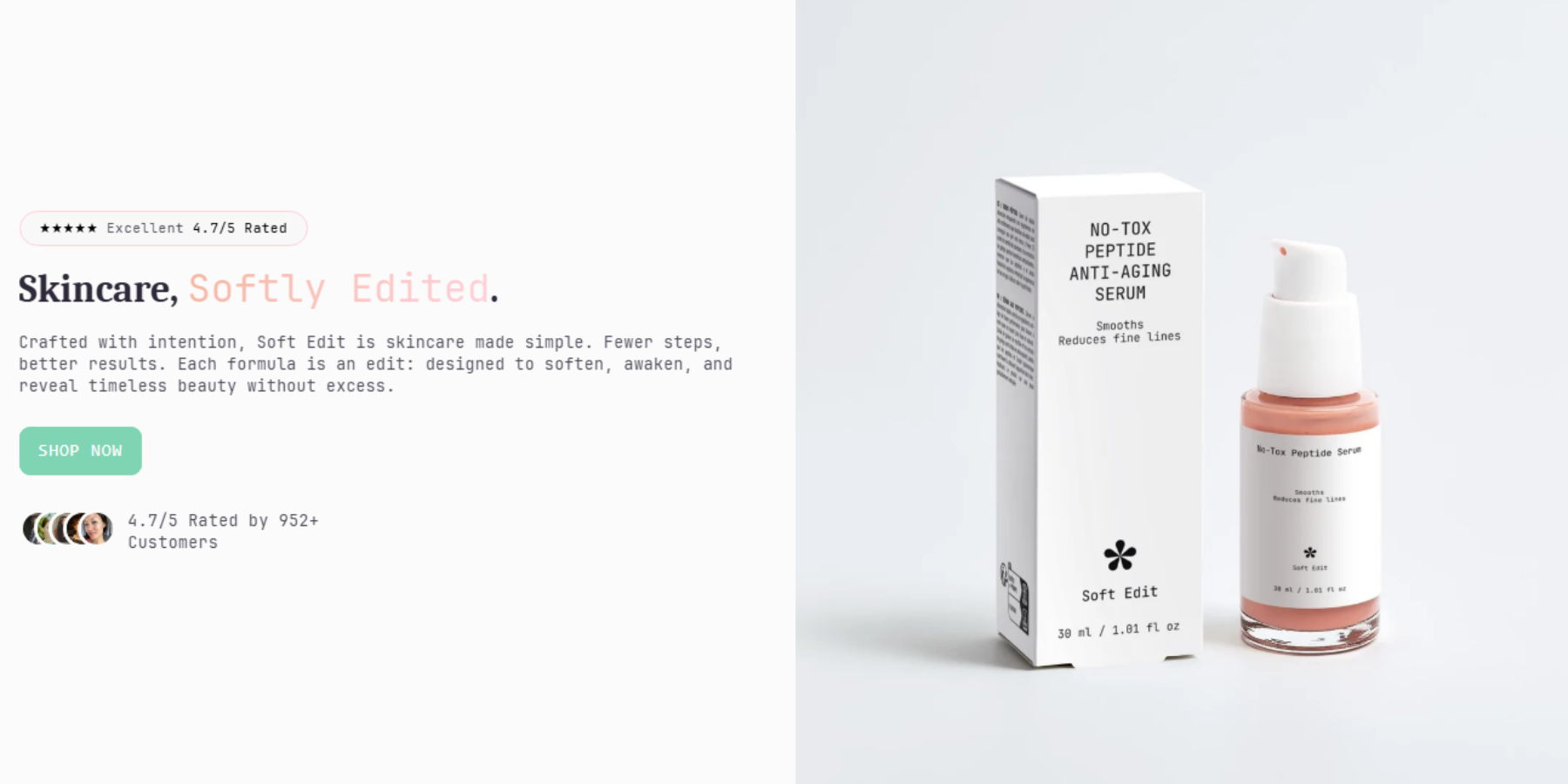
Soft Edit Skin
A 123-response Gen Z skincare study that grew into an ongoing growth PM role spanning TikTok Shop, partnerships, and distribution.
- Role
- Product Manager, Growth & Partnerships
- Category
- Consumer Research → Growth PM
- Timeframe
- February 2026 — Present
- Status
- Ongoing contract product management role
TL;DR
The case in 60 seconds
Product Manager, Growth & Partnerships
Ongoing contract product management role
Problem
A growing consumer brand needs more than visibility. New distribution channels must preserve the customer experience, communicate a clear position, and create a credible path from attention to purchase.
Ownership
I combined quantitative and qualitative consumer research with channel-specific commercialization work, collaborating on storefront experience while leading creator, affiliate, wholesale, and retail outreach.
Key decisions
- Used channel-specific research rather than assuming one message would perform equally across platforms.
- Treated TikTok Shop as a customer-experience surface rather than only a sales listing.
- Connected creator outreach with broader retail and wholesale learning.
Outcome
The research informed Gen Z messaging and content recommendations, then created a pathway into ongoing product, commerce, distribution, and partnership work with the brand.
Project Context
I initially studied how Gen Z consumers engage with beauty content across TikTok, Instagram, and YouTube through a survey of 123 respondents. That work developed into an ongoing contract Product Manager role supporting TikTok Shop, storefront architecture, merchandising, channel strategy, and creator, affiliate, wholesale, and retail partnerships.
The work spans two connected engagements: first understanding how Gen Z consumers evaluate skincare, then applying those findings to commerce, positioning, and distribution decisions.
Challenge
Understanding what actually earns Gen Z trust
A growing consumer brand needs more than visibility. New distribution channels must preserve the customer experience, communicate a clear position, and create a credible path from attention to purchase.
Research approach
Combining structured data with consumer language.
Working within a six-person research team, I helped execute an online consumer study examining skincare attitudes, purchasing behavior, platform usage, product perception, and brand perception. Quantitative questions established patterns across the sample, while open responses revealed how participants naturally described their needs and expectations.
123
Complete responses
Every complete response was included in the final analysis.
20
Survey questions
Covered demographics, preferences, product perception, and brand perception.
8
Open-response prompts
Captured the language consumers used to describe skincare needs and brand impressions.
6
Research collaborators
The study was completed by a six-person undergraduate research team.
Research caveat
The sample was regionally concentrated, skewed female, and based on self-reported behavior. I treated the findings as directional evidence for strategy rather than as a nationally representative market conclusion.
Research findings
Gen Z wanted clarity without compromise.
Respondents were engaged with skincare but remained skeptical, price-conscious, and focused on functional outcomes. The strongest opportunity was not louder promotion. It was clearer value.
01
3.8 / 10
Credibility mattered more than influence
Respondents demonstrated low trust in influencers. Creator reach could generate attention, but product specificity, honest demonstrations, and perceived authenticity were more likely to support consideration.
02
Simple ≠ generic
Minimalism needed to communicate value
Consumers repeatedly described the product as simple, clean, gentle, and soft. A smaller group also used terms such as basic, boring, or cheap, revealing that minimal design needed stronger differentiation and clearer benefit communication.
03
62.6%
Most respondents spent $100 or less
Price sensitivity did not necessarily mean choosing the lowest-priced product. Consumers expected ingredients, effectiveness, and presentation to justify what they paid.
04
90.3%
Mass through entry-prestige dominated
Most respondents preferred drugstore, mass-market, or entry-level prestige skincare, supporting an accessible position grounded in credible performance rather than luxury signaling alone.
Platform usage
Reach and conversion served different roles.
Broadest reach within the sample
93.5%
YouTube
Education and longer-form consideration
69.1%
TikTok
Short-form discovery connected to commerce
61.8%
Strategic translation
Research only mattered if it changed execution.
I translated the findings into a set of channel and commercialization principles. Each recommendation connected a consumer signal to a specific implication for messaging, merchandising, creators, or purchase experience.
Consumer signal
Interpretation
Growth decision
01
Low influencer trust
Interpretation
Follower count alone was not a sufficient signal of persuasion.
Growth decision
Prioritize creator fit, useful demonstrations, clear disclosures, and attributable links or codes.
02
Demand for simple, effective skincare
Interpretation
Consumers wanted routines and product benefits that were easy to understand.
Growth decision
Use concise problem-solving language across content, product pages, and storefront merchandising.
03
Price sensitivity
Interpretation
Customers evaluated affordability alongside expected quality and visible usefulness.
Growth decision
Make ingredients, use cases, and product value legible before relying on promotional pricing.
04
Short-form platform adoption
Interpretation
Discovery increasingly occurred in environments designed for fast content consumption.
Growth decision
Connect short-form education to a lower-friction purchase path through TikTok Shop.
Expanded role
From consumer insight to growth ownership
I combined quantitative and qualitative consumer research with channel-specific commercialization work, collaborating on storefront experience while leading creator, affiliate, wholesale, and retail outreach.
Growth workstreams
Expanding the path from discovery to purchase.
My role expanded from delivering recommendations to owning growth-oriented product, commerce, and partnership initiatives across multiple distribution channels.
01
TikTok Shop
Lead the end-to-end launch process across storefront architecture, product organization, merchandising, customer experience, and channel experimentation.
02
Creators and affiliates
Source and evaluate potential partners based on audience fit, credibility, brand alignment, commercial structure, and measurable contribution.
03
Wholesale and retail
Research and pursue retailers, wholesalers, distributors, subscription boxes, and other business-to-business distribution opportunities.
04
Positioning and commercialization
Translate customer, channel, and performance signals into recommendations for messaging, merchandising, customer experience, and distribution.
Operating model
Connecting research, commerce, and distribution.
A channel is not a strategy by itself. The operating model connects customer evidence to a hypothesis, turns the hypothesis into an execution decision, and establishes how that decision will be measured and refined.
01
Customer insight
Identify needs, objections, language, and trust signals.
02
Channel hypothesis
Define where and how the insight could influence behavior.
03
Execution
Apply the hypothesis through storefront or partnership decisions.
04
Attribution
Connect sessions, orders, or accounts to a verifiable source.
05
Iteration
Use channel evidence to refine positioning and merchandising.
Attribution is part of the product decision rather than a reporting step added afterward. TikTok Shop reporting, registered UTM parameters, creator-specific links or codes, and partner account records create distinct sources for evaluating performance.
Measurement
Defining success before claiming it.
The growth engagement remains active. These metrics define how the work should be evaluated without presenting future outcomes as results that have already occurred.
Commerce
- Product-page click-through rate
- Product-page conversion rate
- Average order value
- Refund and return rate
- Attributable net revenue
Creators and affiliates
- Outreach-to-response rate
- Partner onboarding rate
- Activated creator rate
- Content publication rate
- Revenue per activated partner
Wholesale and retail
- Qualified accounts identified
- Partner conversations initiated
- Sample or proposal progression
- Initial purchase orders
- Reorders
Customer experience
- Common pre-purchase questions
- Product-page exits
- Message and review themes
- Merchandising confusion
- Repeat-purchase behavior
Current state
Research completed. Commercial execution underway.
Completed
- Designed and conducted a 123-response Gen Z consumer study
- Analyzed skincare attitudes, purchasing behavior, platform usage, and brand perception
- Synthesized quantitative findings and open-response themes
- Identified credibility, simplicity, price-value alignment, and ingredient transparency as major strategic themes
- Recommended clearer problem-solving content across Instagram, TikTok, and YouTube
- Connected TikTok content strategy to the opportunity for direct platform conversion
In progress
- TikTok Shop architecture and launch execution
- Storefront merchandising and customer-experience decisions
- Creator and affiliate sourcing
- Wholesale and retail outreach
- Positioning and commercialization recommendations
- Channel attribution and performance measurement
Reflection
The brand did not need to become louder.
It needed to make the value of a simple skincare experience more specific, credible, and easier to purchase.
The project began as a consumer-behavior study, but its most useful lesson emerged through commercialization. TikTok Shop, creator partnerships, and retail distribution only become meaningful when messaging, merchandising, customer experience, and measurement reinforce the same consumer need.
Credits
Soft Edit Skin
- Role
- Product Manager, Growth & Partnerships
- Category
- Consumer Research → Growth PM
- Timeframe
- February 2026 — Present
- Status
- Ongoing contract product management role